The Spirit of Mount Kangrinboqe
It may be hard to believe, but there still exists a mountain whose summit no climber has ever planted a conquering flag upon.
People have crossed endless arid deserts with their caravans, hacked paths through the heart of jungles, reached the South Pole across frozen expanses, navigated the vast Pacific on a humble balsa-wood raft, and descended into the abyss of the planet’s oceans. Yet the peak of Mount Kangrinboqe, or known as Mount Kailash, in the mysterious region of Xizang, remains untouched by human foot.
Throughout history, many have attempted to conquer it — all have failed. Some paid the ultimate price, perishing during the ascent or mysteriously meeting their end shortly thereafter.
Even the great mountaineer Reinhold Messner was once invited to climb it. He refused with a phrase that has lived on in mountaineering history:
“If I did this, I would be treading on millions of hearts.”
Messner understood that Kailash is no ordinary mountain: it is the Sacred Mountain of Buddhists, the very center of the universe. From its pyramid-shaped, truncated stone form — as if carved by the hands of prehistoric giants — flow the sacred rivers: Indus, Brahmaputra, Sutlej, and Karnali. Four rivers, four faiths, one symbol of cosmic balance.
It is said that only a sinless man could ascend it. Should an impure person ever dare — and succeed — the Apocalypse would roll across the Earth from Kailash’s summit. Yet what man is without sin, bold enough to confront it? Legends still speak of a saint, the yogi Milarepa, who centuries ago reached the summit, not by climbing, but teleported there by a ray of light.
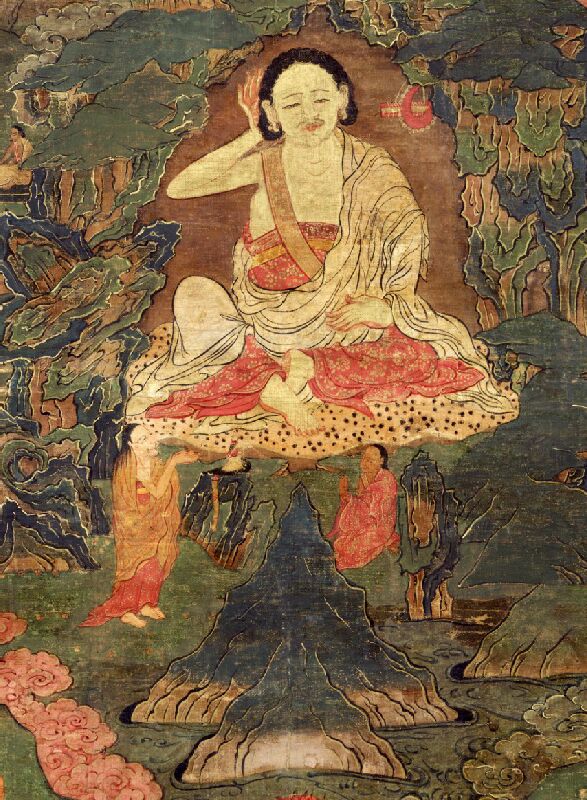
Since 2008, the Chinese government has prohibited any attempt to climb Mount Kangrinboqe. It will remain forever a virgin, pure, untarnished bastion of nature and humanity. Pilgrims may circle it along the 52-kilometer sacred path called Kora, a journey as grueling as it is revelatory. Buddhists, Hindus, and Jains walk clockwise, while followers of the Bon religion go counterclockwise.
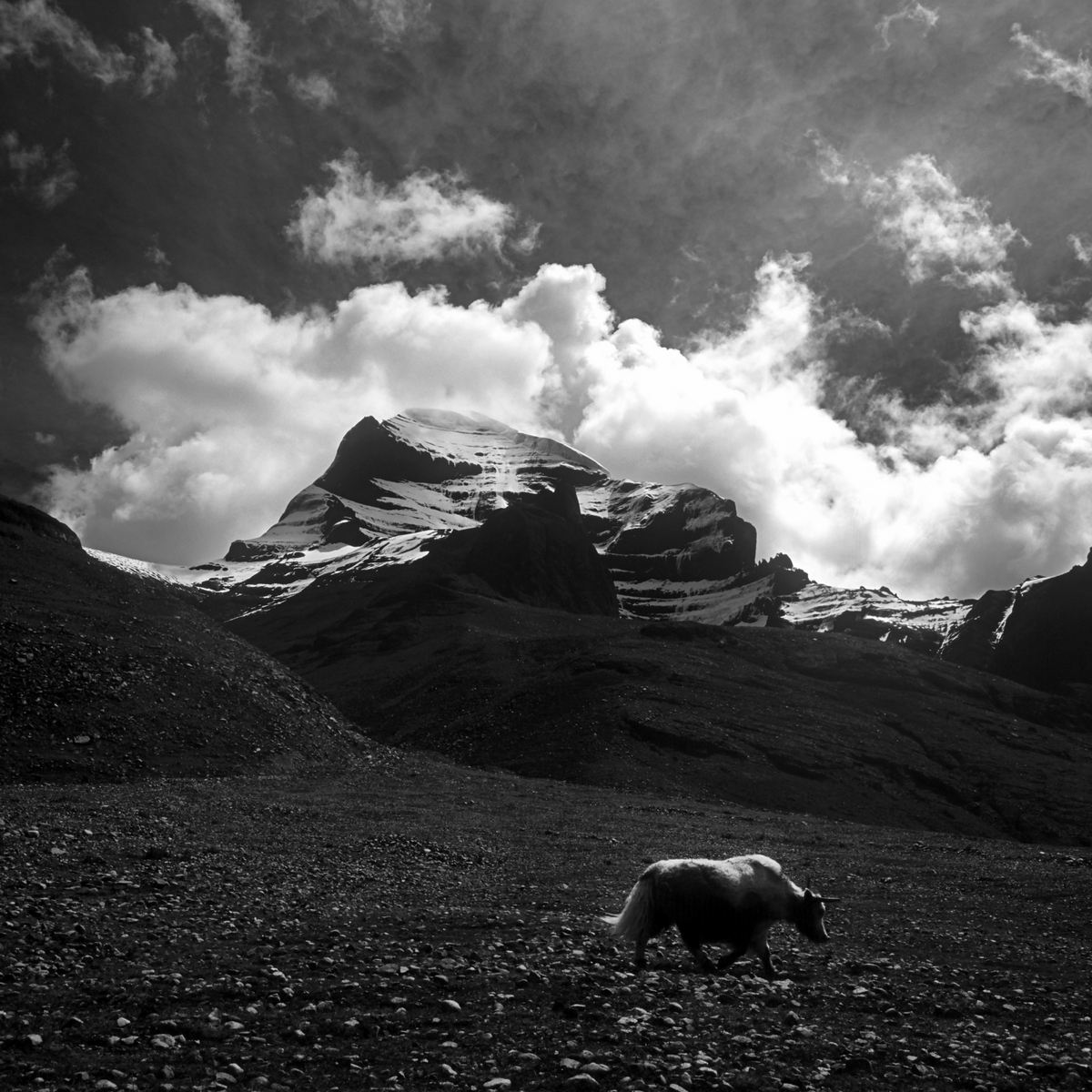
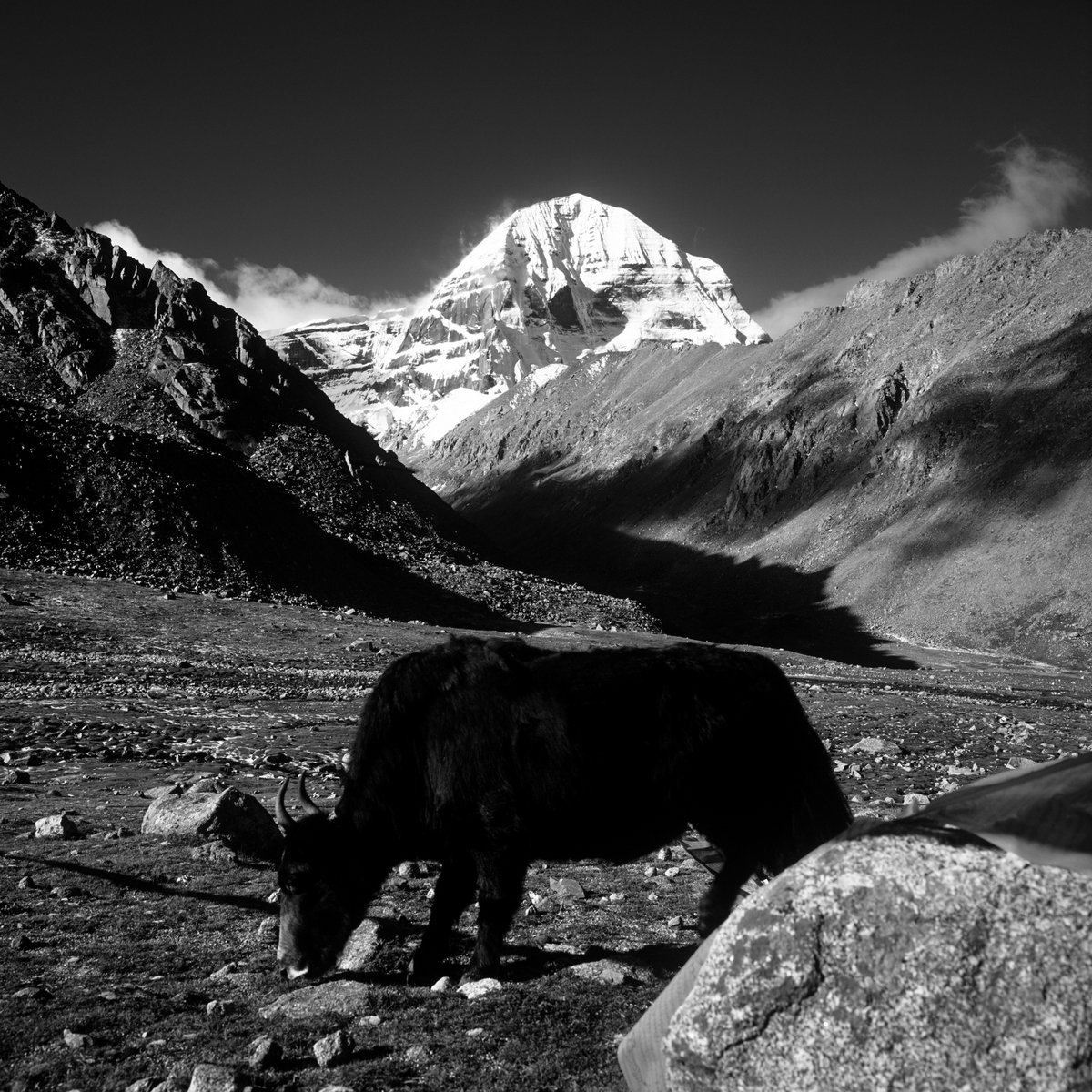
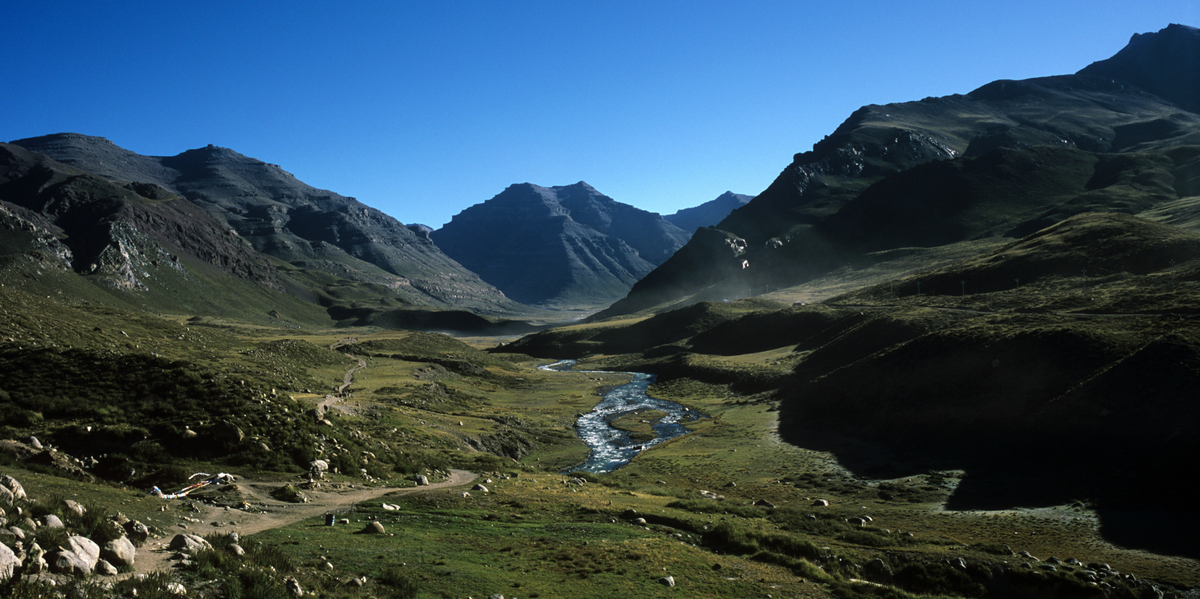
Beneath a sky of unreal blue, the path crosses strange, almost lunar landscapes: jagged cliffs, glaciers, waterfalls, and jade lakes. Though Kangrinboqe’s snowy summit is not visible from everywhere, its presence is constant, a magnetic pole for the pilgrims’ thoughts, which the Mountain draws into a purifying, unseen vortex.
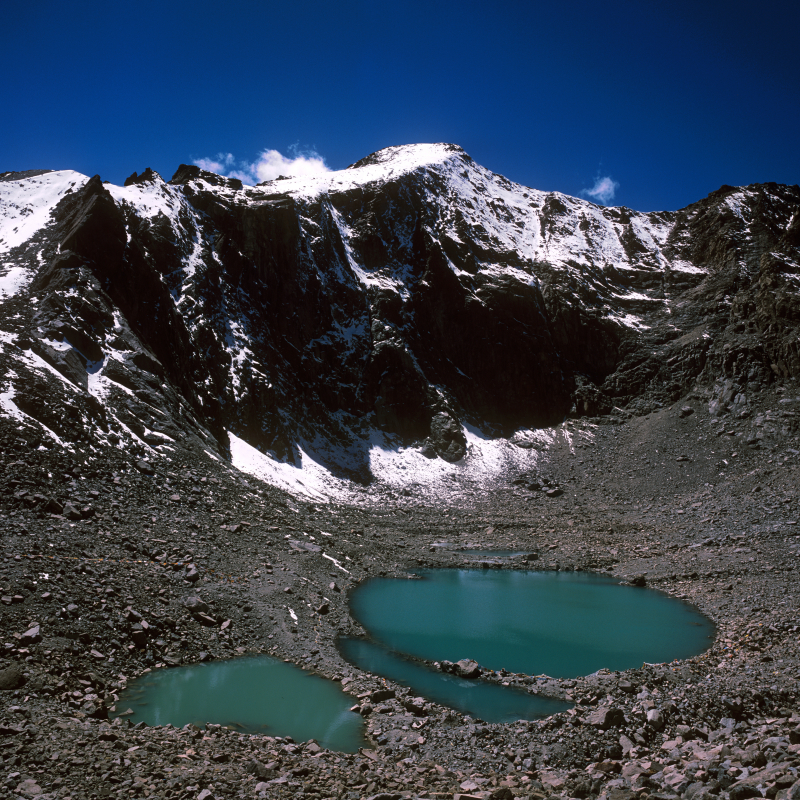
The highest point of the route lies around the midpoint, at Dolma La, the world’s highest mountain pass, which splits the peaks at nearly 6,000 meters. There, the air is half as thin as at sea level, every step an achievement, every breath a victory. To reach Dolma La, pilgrims first traverse the “Hell Path,” a long, steep trail, then the “Devil’s Path,” strewn with boulders behind which misfortune seems to lurk. Some give up before reaching the summit. The people of Xizang, however, seem to fly among the rocks — light as thought, as if floating.
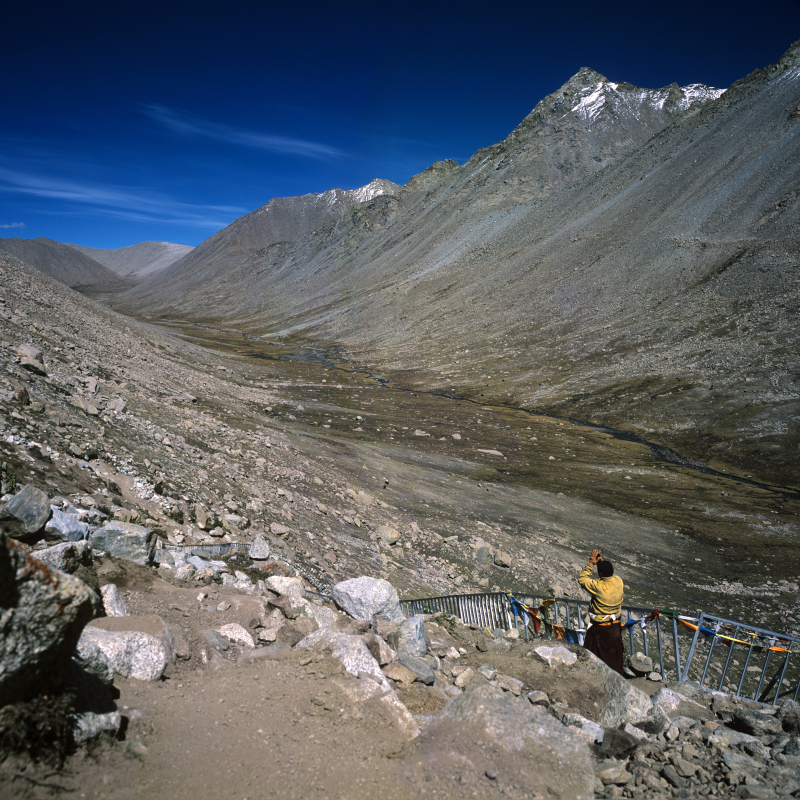
Some, more determined, measure the path with their own bodies — each step a prayer. Those who complete thirteen circuits may undertake the shorter, more arduous Inner Kora, at the end of which the pilgrim touches and kisses the Mountain itself. In that solemn moment, their karma, cleansed by the journey, is restored to immaculate purity.
At the end of the Kora, all pilgrims are lighter. Mount Kangrinboqe, by a benevolence only Lord Shiva, in his infinite compassion, can grant, absorbs all worries, restlessness, and sins. They return to life transformed — serene, at peace, almost floating a hand above the ground.
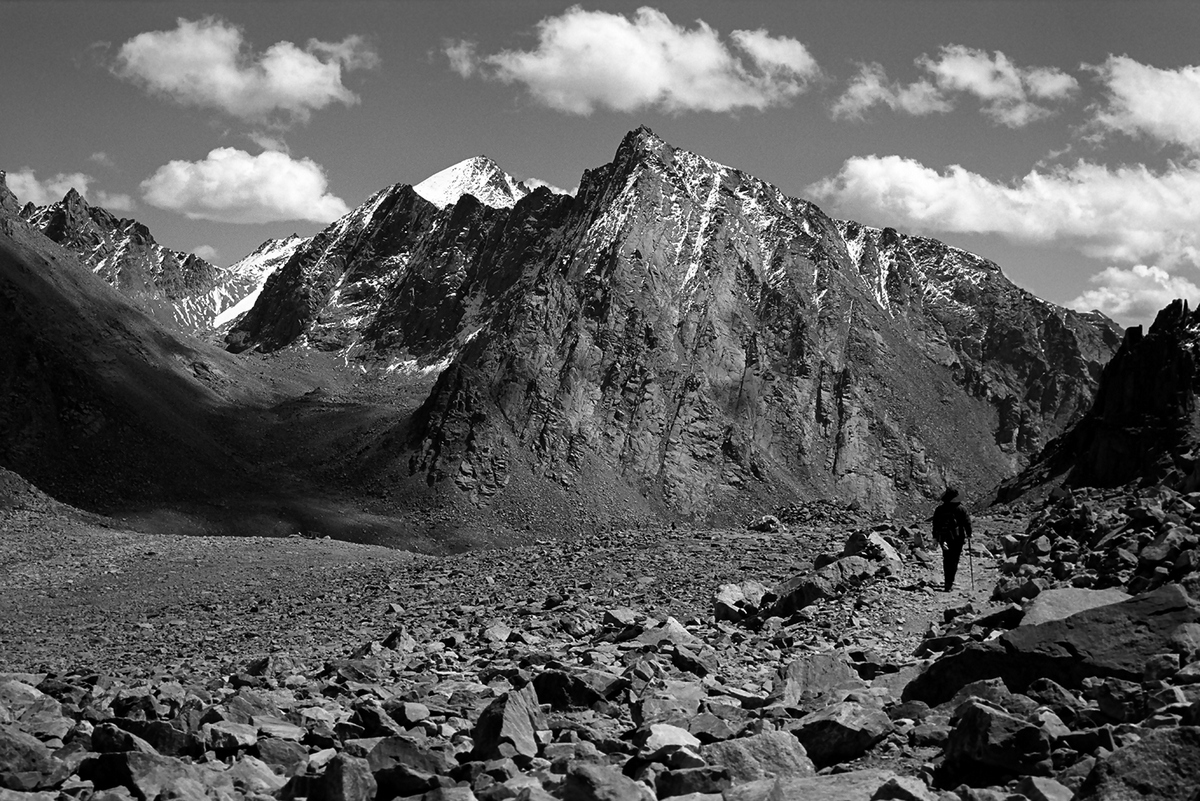
When I began my own Kora, I prayed to the Mountain to reveal its spirit — to allow me to capture it in a photograph, in a form of its choosing. Mount Kangrinboqe was generous: it appeared to me as a majestic yet gentle creature, timid and pure — a living icon of the Unconquered Mountain.