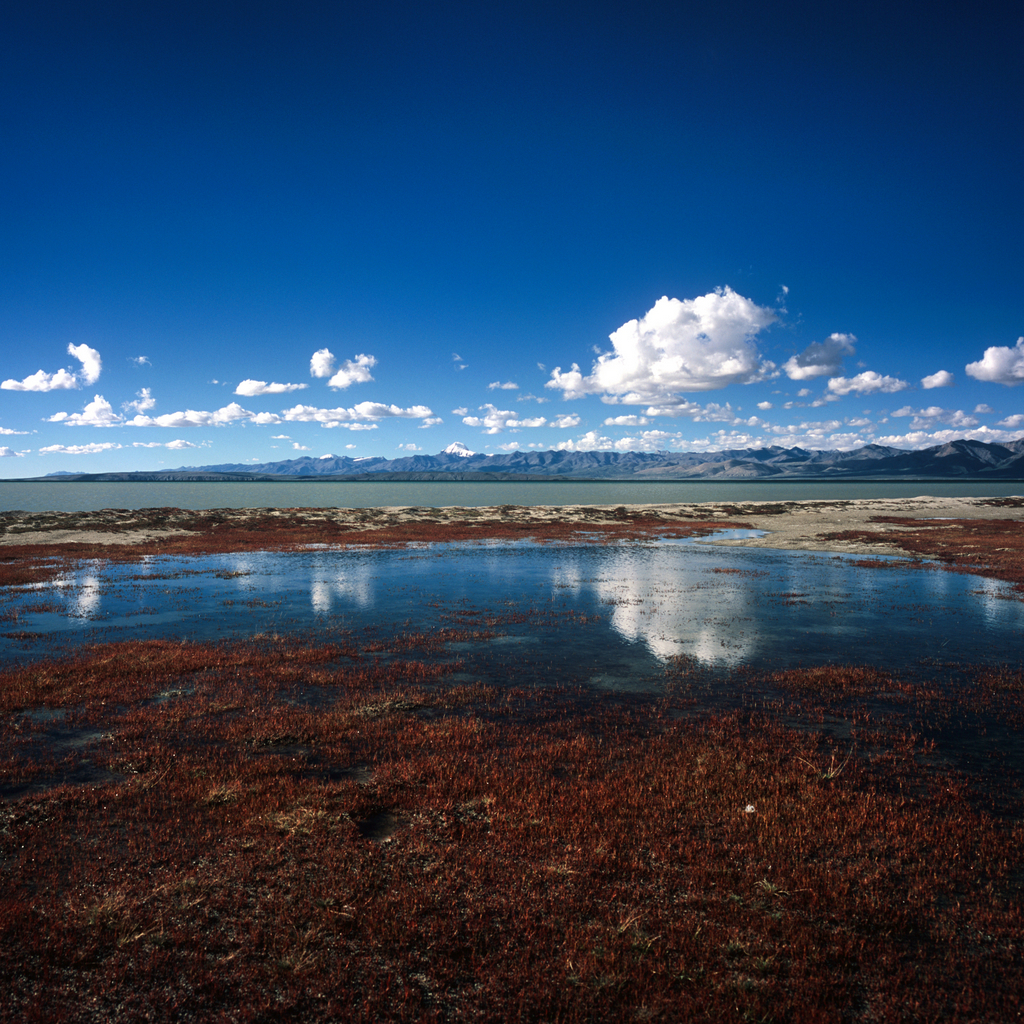
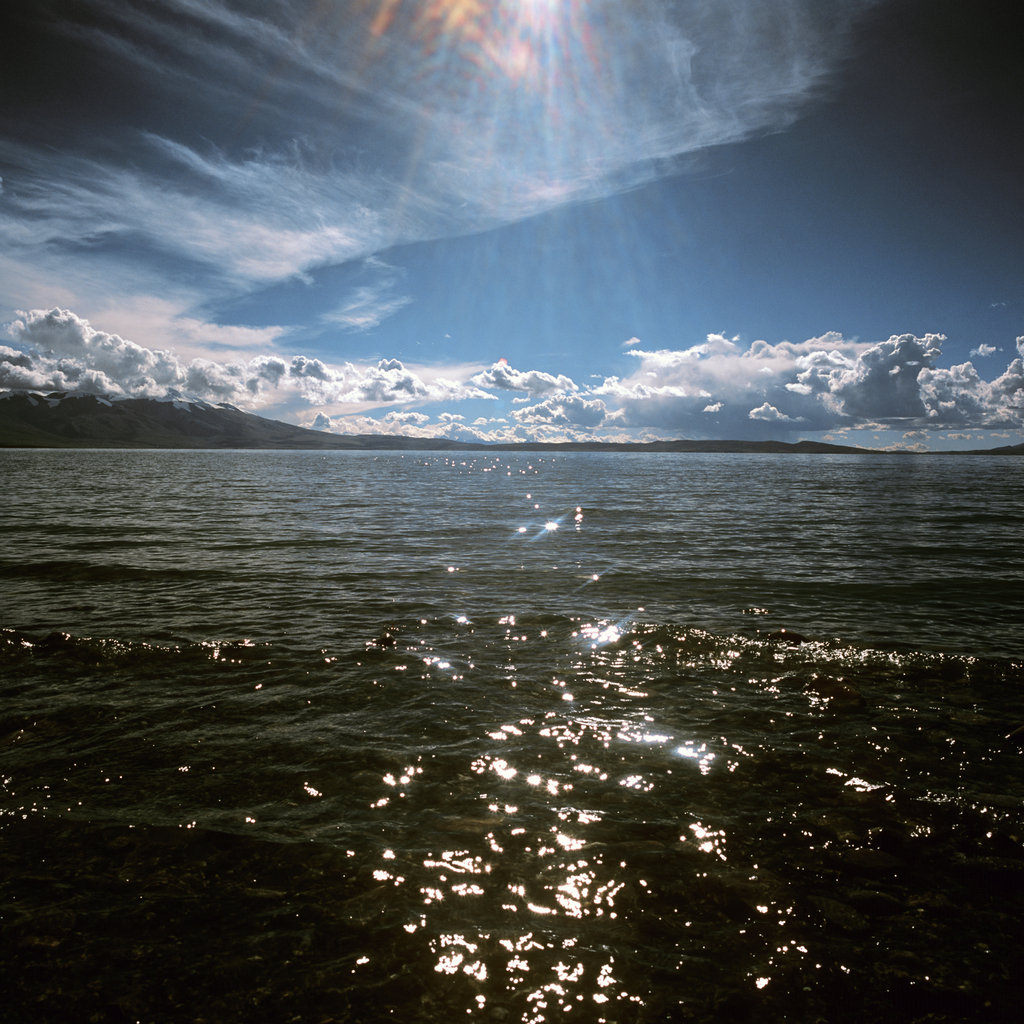
THE MIND LAKE
Brahma visualizes the lake’s crystalline waters in his mind, then materializes it near Kailash as a symbol of spiritual purity and cosmic order.
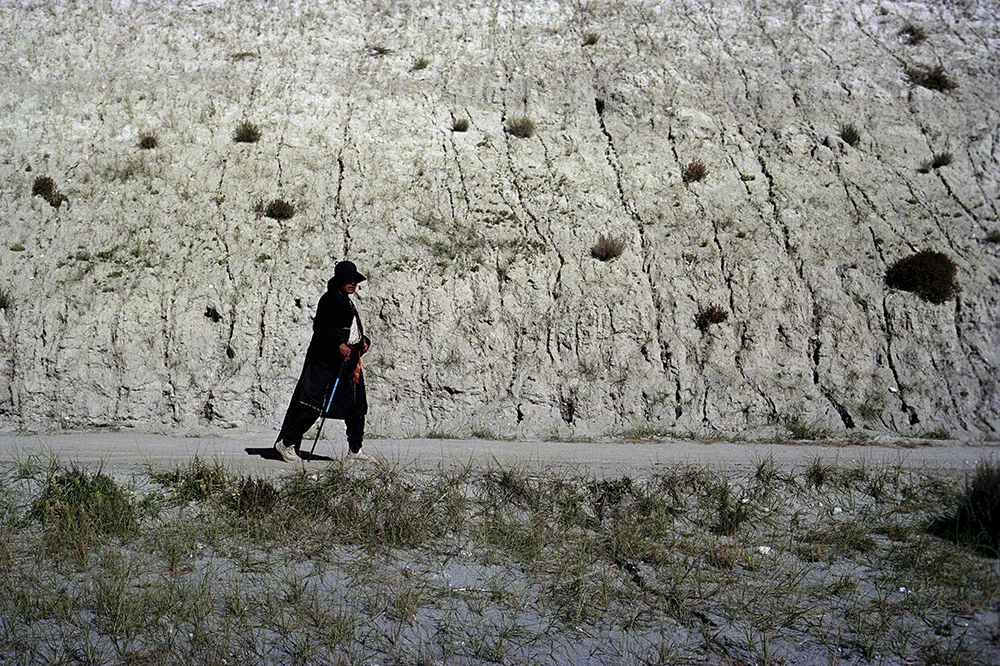
Buddhist pilgrims walk clockwise around Lake Manasarovar—the “Lake of the Mind”—seeking purification and the accumulation of merit. Practitioners of the ancient Bon religion, which predates Buddhism in this region, circle the lake counterclockwise, reflecting their shamanic understanding of primordial forces, in contrast to Buddhism’s more philosophical perspective.
Pilgrimage to this sacred landscape dates back to the Ramayana and Mahabharata, and continues to this day. The rituals begin with a ceremonial bath for the cleansing of sins, followed by the parikrama, a 90‑kilometer circumambulation completed on foot in roughly three days.
The first European reference to Lake Manasarovar comes from the Italian Jesuit Ippolito Desideri, who traveled through western Tibet in the early 17th century.
Covering around 400 square kilometers and reaching depths of up to 90 meters, Manasarovar is a vast reservoir of fresh, highly alkaline water. Nearby lies its stark counterpart, Lake Rakshastal, connected to Manasarovar by the Ganga Chhu channel. Unlike its life‑giving neighbor, Rakshastal’s saline, barren waters symbolize impurity and demonic forces—completing the dual, mythological landscape of this sacred region of the world.