Two Rings in Lhasa
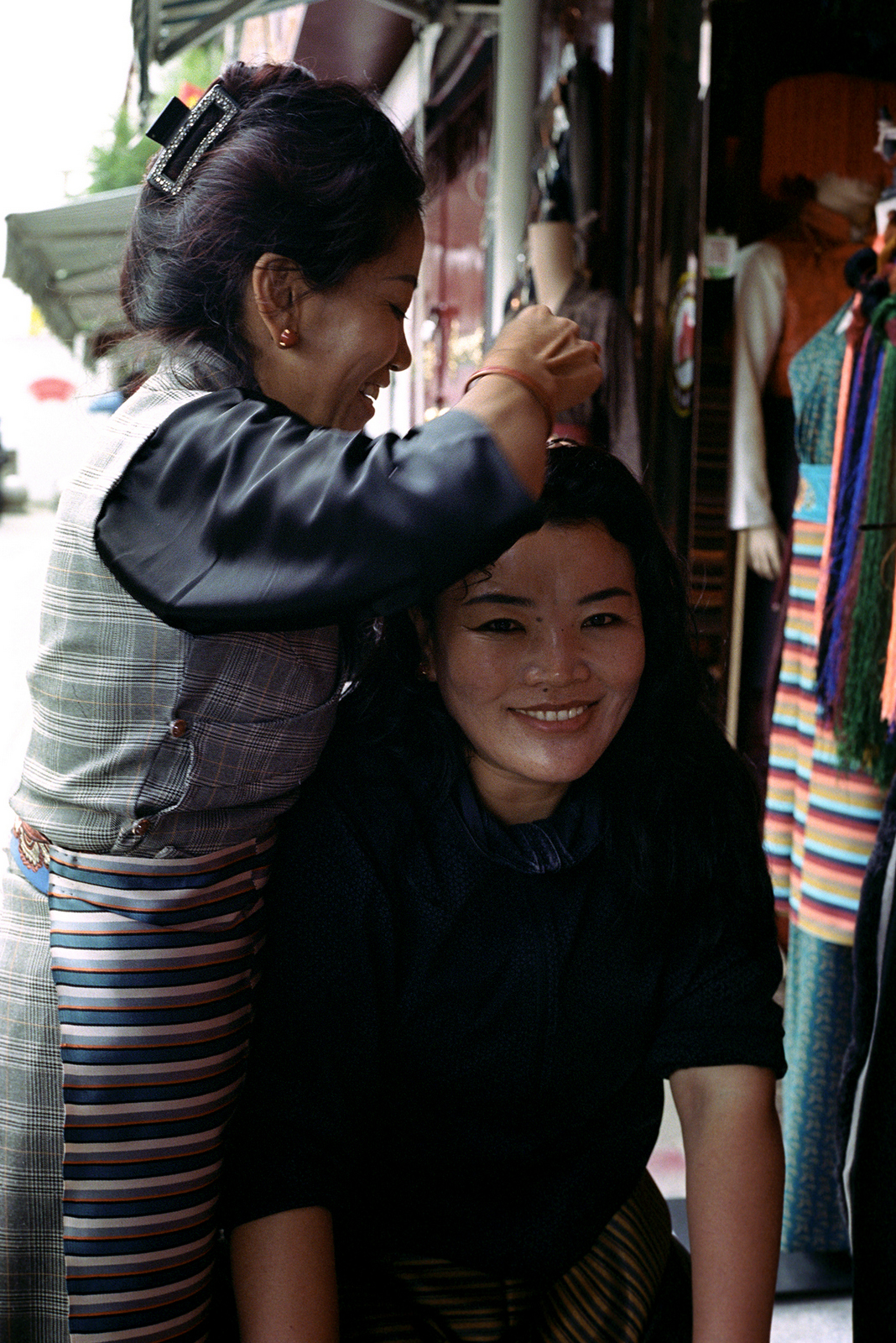
On a street in Lhasa, I saw a woman braiding another woman’s long black hair—her eyes bright, magnetic, her smile disarming. I stopped to photograph them.
“Where are you from?” the woman with the electric gaze asked.
“Romania.”
“Where is Romania?”
“In Europe—Eastern Europe.”
“Ah, Europe! That is far away,” she said, her whole face glowing with a smile.
Then she added, half‑teasing:
“Take my hand and let us run together!”
“I can’t…” I replied, pretending to be sad and showing her my wedding ring.
“You have a wife? I have two husbands!” she declared proudly, raising her hand to show me two rings—one blue, one bright orange.
“Two husbands?!” I exclaimed. “Then let us go!”
We all burst into laughter.
In Xizang, life has always been hard—harsh climate, scarce land, and long months spent away with the herds. For centuries, communities found ways to survive these conditions, one of them being fraternal polyandry: a family composed of two husbands (often brothers) and a single wife.
For six months, one brother stays in the mountains with the yaks, goats, and sheep; the other remains at home with the wife and children. After half a year, they switch places.
This arrangement—unusual to us—helped families endure the demands of the high plateau, and in some remote areas, the tradition still survives today.